
Choosing a cigarette-making machine is easy if the only question is, “How many cigarettes can it produce per hour?” Choosing one that will still make sense three years from now is harder.
Production requirements change. Volumes increase, product formats evolve and a machine that once seemed perfectly adequate can become the bottleneck in the line. That is why manufacturers should evaluate equipment not only by its current output, but by how well its technical capabilities fit the production process and its potential growth.
Start with the production requirements
The first step is to define what the machine actually needs to handle. Production volume is important, but it is only one variable. Product formats, tobacco characteristics, operating hours, changeover frequency and available workforce all influence the right configuration.
A manufacturer running one high-volume product may prioritize continuous operation and output. Another producing several formats may care more about flexibility and fast changeovers. The “best” cigarette-making machine is therefore not necessarily the fastest one. It is the one that matches the manufacturer's operating model.
Look beyond maximum output
Manufacturers naturally compare machines by rated capacity. But maximum speed rarely tells the whole story.
A more useful question is how the machine performs during normal production. Can it maintain stable operation over a long shift? How frequently does it require intervention? How does it behave when tobacco characteristics change? And how much production is realistically lost during cleaning, maintenance and changeovers?
A slightly lower nominal output can make more business sense if the machine delivers more usable production with fewer interruptions.
Precision and process control
The cigarette-making process depends on repeatable tobacco feeding, forming and handling. Small deviations can affect density, draw and the consistency of the finished product.
For this reason, manufacturers should examine how the machine maintains process parameters and how easily operators can identify and correct deviations. Clear controls, accessible adjustments and predictable machine behavior can be more valuable than an impressive specification that only applies under ideal conditions.
Think about the next stage of the line
Expansion should be considered before the first machine is installed. A cigarette-making machine may perform perfectly on its own, but production can eventually outgrow the way the stages are connected.
Manufacturers should therefore consider how making will interact with filling, packing and overwrapping. Can additional equipment be integrated later? Is there sufficient space and infrastructure? Will the next machine create a bottleneck for the existing one?
Planning these questions early can prevent an expensive redesign when production volumes increase.
Build for today's production without blocking tomorrow's
The smartest equipment investment is rarely the one with the longest specification sheet. It is the one that fits today's needs while leaving sensible options for tomorrow.
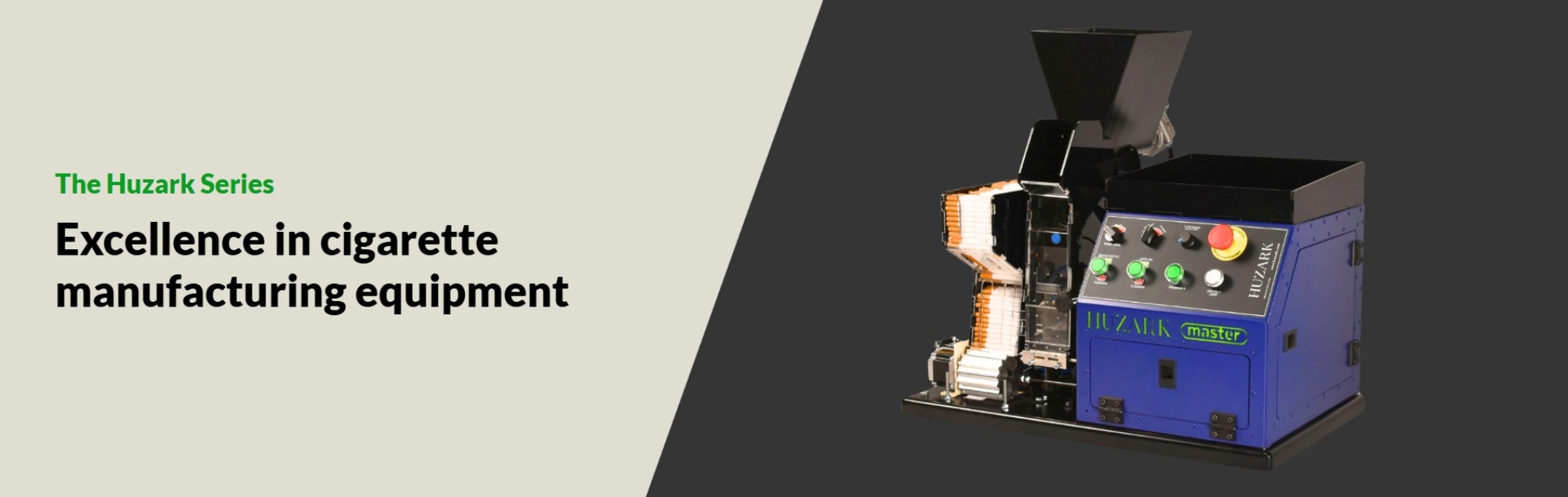
For Huzark, that means looking beyond a single cigarette-making machine. Its pneumatic equipment, powered by compressed air, can form part of a broader production setup incorporating making, filling, packing and overwrapping. Instead of forcing manufacturers to predict exactly what their factory will look like years from now, Huzark provides a way to expand the production flow step by step — adding capability when the business needs it, rather than paying for complexity before it does.