Thyroid cancer is among the most rapidly diagnosed malignancies worldwide, yet outcomes are excellent for many people when it is detected early and treated appropriately. Because the thyroid controls metabolism, energy, and many body functions, even a small problem can feel overwhelming. This in-depth guide walks you through symptoms, how doctors evaluate a neck nodule, and modern treatment options—from surgery to targeted therapies—so you can make informed choices and partner confidently with your care team.
What Is It? The Thyroid and Types of Cancer
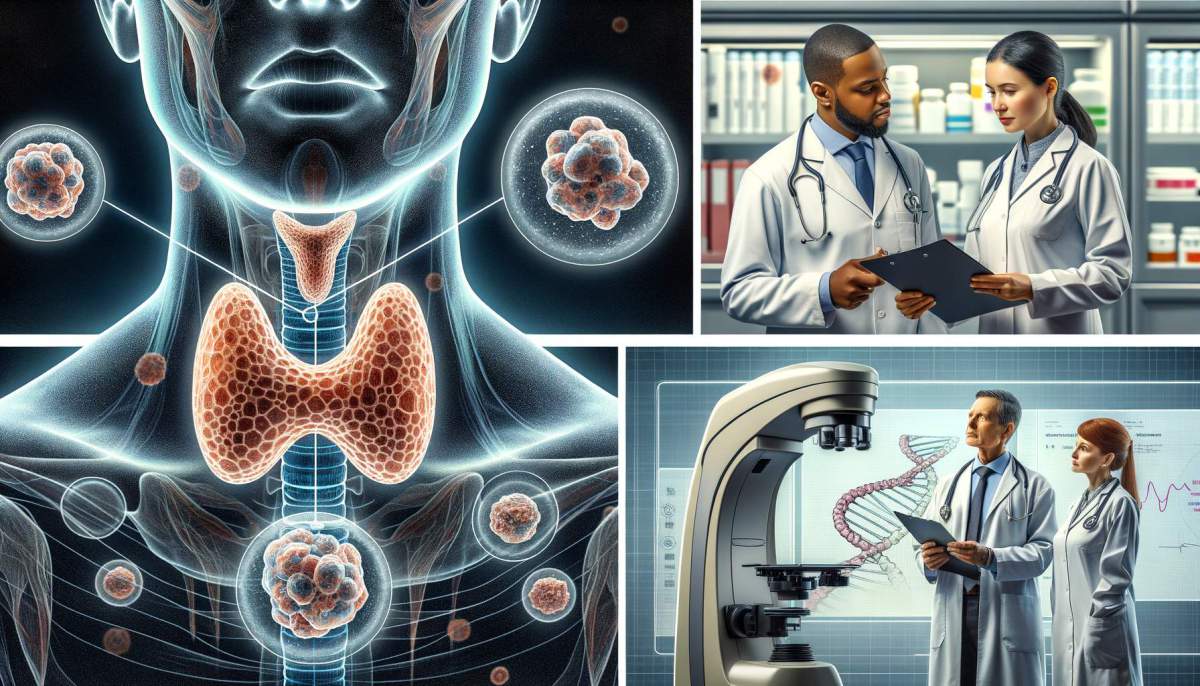
The thyroid is a small, butterfly-shaped gland at the base of the neck that produces hormones regulating metabolism, heart rate, body temperature, and energy. When abnormal cells grow uncontrollably in this gland, thyroid cancer develops. Understanding what is happening in the gland helps you grasp why certain tests and treatments are recommended.
There are several types of thyroid cancer that behave differently and require tailored approaches:
- Papillary thyroid cancer (PTC): The most common type, typically slow growing, often spreading to neck lymph nodes but still highly treatable.
- Follicular thyroid cancer (FTC): Less common than papillary; more likely to spread via the bloodstream to lungs or bones.
- Hürthle cell carcinoma: A variant of follicular type with distinctive cell features; can be more aggressive.
- Medullary thyroid cancer (MTC): Arises from C-cells that produce calcitonin; may be sporadic or inherited (RET gene mutations).
- Anaplastic thyroid cancer (ATC): Rare and very aggressive; requires urgent, multidisciplinary care.
- Poorly differentiated carcinoma: Sits between differentiated and anaplastic in behavior and aggressiveness.
Most people are diagnosed with differentiated forms—papillary or follicular—often grouped as differentiated thyroid cancer because they retain some normal thyroid features and generally have excellent outcomes with appropriate care.
Symptoms and Early Warning Signs
Many individuals with thyroid cancer have no symptoms and learn about a thyroid nodule during a routine exam or imaging done for another reason. When symptoms do occur, they often relate to the size and location of the nodule or spread to nearby structures.
- Painless neck lump or swelling: A firm nodule low in the front of the neck may be the first sign and should be evaluated, especially if it grows.
- Hoarseness or voice changes: Persistent hoarseness can result if a nodule affects the recurrent laryngeal nerve; voice changes warrant specialist assessment.
- Difficulty swallowing or a sensation of fullness: Compression of the esophagus can cause dysphagia.
- Breathing difficulty or noisy breathing (stridor): Pressure on the trachea may cause shortness of breath.
- Neck pain radiating to the jaw or ear: Less common but possible, particularly with rapid enlargement.
- Persistent cough not due to infection: A chronic, unexplained cough should be discussed with a clinician.
Symptoms of advanced thyroid cancer may include enlarged lymph nodes, bone pain (if there is metastasis to the skeleton), or respiratory symptoms (if there is spread to the lungs). Any new, persistent neck mass should be evaluated by a healthcare professional.
Risk Factors and Causes
Not everyone with a risk factor will develop thyroid cancer, and many people with the disease have no identifiable risks. Still, certain exposures and inherited factors can increase likelihood.
- Sex and age: Women are affected more often than men; risk rises from young adulthood into middle age, with a second peak in older adults.
- Radiation exposure: Past radiation to the head/neck in childhood (for acne or enlarged adenoids historically) or fallout from nuclear accidents raises the risk of thyroid cancer. Modern medical imaging uses doses designed to be as low as reasonably achievable.
- Family history and genetics: Having a first-degree relative with thyroid cancer slightly elevates risk. MTC can be inherited through RET mutations (e.g., MEN2 syndromes), and some papillary tumors harbor hereditary predispositions.
- Iodine intake: Iodine deficiency or excess can influence nodule formation and patterns of disease; global fortification has reduced deficiency-related problems.
- Hashimoto's thyroiditis: Chronic autoimmune thyroiditis is associated with a higher rate of nodules and may modestly increase risk.
- Environmental and occupational factors: Possible associations include certain industrial exposures, though data are mixed.
On the molecular level, papillary tumors often carry BRAF or RAS mutations or gene rearrangements (e.g., RET/PTC), while medullary tumors arise from RET activation. Such changes can guide therapy in advanced disease.
How Doctors Diagnose It
Diagnosing thyroid cancer typically begins when a nodule is noticed during a physical exam or appears incidentally on ultrasound, CT, or MRI. A careful stepwise evaluation helps identify which nodules require biopsy and which can be safely observed.
Clinical evaluation and blood tests
- History and exam: Clinicians ask about growth rate, radiation exposure, family history, voice changes, and compressive symptoms, and they examine the thyroid and neck lymph nodes.
- TSH and thyroid hormones: A low TSH suggests a hyperfunctioning nodule, which is rarely malignant; a radionuclide scan may be used in that scenario.
- Calcitonin: If medullary disease is suspected or there is a relevant family history, calcitonin can aid in detection and monitoring.
High-resolution neck ultrasound
Ultrasound is the cornerstone imaging test to characterize nodules, evaluate suspicious features, and map cervical lymph nodes. Features such as marked hypoechogenicity, microcalcifications, irregular margins, taller-than-wide shape, and increased vascularity raise concern for thyroid cancer. Ultrasound risk stratification systems (e.g., ACR TI-RADS, ATA guidelines) guide decisions about biopsy.
Fine-needle aspiration (FNA) biopsy
FNA is a minimally invasive procedure—often done under ultrasound guidance—to obtain cells for cytology. It is the single most important test to diagnose or exclude thyroid cancer in a suspicious nodule. Results are categorized using the Bethesda System, which helps estimate malignancy risk and suggest next steps (surveillance, repeat FNA, diagnostic surgery).
Molecular testing
When FNA is indeterminate (Bethesda III or IV), molecular testing for genetic mutations and gene expression can clarify the likelihood of thyroid cancer. Detection of changes such as BRAF V600E, RAS, RET/PTC, or PAX8/PPARγ may sway management toward surgery or a more conservative approach, depending on context.
Staging and additional imaging
Once cancer is confirmed, staging determines the extent of disease. For most cases, ultrasound of the central and lateral neck maps involved nodes. CT or MRI helps when there is suspicion of invasive disease or upper chest involvement, and PET/CT can be useful in more advanced or RAI-refractory cases. Staging clarifies how far thyroid cancer has spread and informs both prognosis and treatment decisions.
Staging and Prognosis
Staging uses the AJCC TNM system, which considers tumor size and invasion (T), lymph node involvement (N), and distant metastasis (M), with age incorporated for differentiated tumors. Importantly, many people—especially younger adults—with thyroid cancer live long, healthy lives after treatment.
- Differentiated disease: Most papillary and follicular tumors have an excellent prognosis; 10-year survival exceeds 90% in many series.
- Risk stratification: The American Thyroid Association (ATA) classifies risk of recurrence (low, intermediate, high) based on tumor features, lymph node involvement, and invasion. Early risk estimates are refined over time using the patient’s response to therapy.
- Molecular markers: BRAF V600E and TERT promoter mutations may signal higher risk and influence follow-up intensity.
- Medullary disease: Outcomes vary with stage and calcitonin levels; early detection in hereditary cases can be lifesaving.
- Anaplastic disease: Aggressive and challenging, often requiring combined-modality therapy; swift, coordinated care is essential.
After initial therapy, doctors often track disease with serum thyroglobulin (for differentiated disease) or calcitonin and CEA (for medullary), combined with neck ultrasound. These markers and imaging help gauge the evolving risk of recurrence and tailor care.
Treatment Options: From Surgery to Precision Medicine
Management is individualized, balancing tumor biology, stage, patient preferences, and overall health. For most, the journey begins with surgery; additional treatments and long-term hormone management frequently follow. In every case, the care plan should be crafted by a multidisciplinary team experienced in thyroid cancer.
Surgery
Surgery is the mainstay for localized disease. The extent of surgery depends on tumor size, location, nodal disease, and risk profile, as well as the presence of compressive symptoms.
- Thyroid lobectomy: Removal of one lobe may be sufficient for small, unifocal, intrathyroidal papillary tumors without high-risk features, limiting the risk of hypocalcemia and nerve injury and sometimes avoiding lifelong high-dose hormone replacement.
- Total thyroidectomy: Removal of the entire gland is favored for larger tumors, multifocal disease, significant nodal involvement, or when radioactive iodine will likely be used. This approach simplifies surveillance using thyroglobulin and whole-body scanning.
- Lymph node dissection: Therapeutic removal of involved nodes in the central (level VI) and/or lateral compartments is recommended when nodal spread is confirmed. Prophylactic node dissection is considered selectively and remains debated.
Experienced surgeons are critical to minimize complications such as recurrent laryngeal nerve injury (voice changes), hypocalcemia from parathyroid disruption, bleeding, and infection. Your surgeon will discuss the risks and benefits tailored to your case of thyroid cancer.
Radioactive iodine (RAI) ablation and therapy
After total thyroidectomy for selected differentiated tumors, RAI (I-131) can ablate residual tissue and treat microscopic disease. It is most helpful for intermediate- or high-risk cases, selected low-risk patients with adverse features, and those with distant metastases that uptake iodine.
- Preparation: RAI works best when thyroid-stimulating hormone (TSH) is high; this can be achieved with temporary hormone withdrawal or recombinant TSH injections. A low-iodine diet for 1–2 weeks enhances uptake.
- Dosing and safety: Dose depends on goals (ablation vs. therapy) and risk. Common side effects include dry mouth, taste changes, nausea, fatigue, and transient neck soreness. Long-term risks include salivary gland dysfunction and, rarely, secondary malignancies with high cumulative doses.
- Follow-up: Post-therapy scans assess distribution of uptake and may detect sites not seen on other imaging. RAI can also treat microscopic or known residual disease in thyroid cancer that concentrates iodine.
Thyroid hormone replacement and TSH suppression
After total thyroidectomy, lifelong levothyroxine replaces missing hormone. In addition, mild to moderate TSH suppression reduces growth signaling to any residual thyroid cancer cells. The degree of suppression is tailored to risk: more suppression early for higher-risk patients, with relaxation over time if there is an excellent response. Careful dosing minimizes symptoms such as palpitations, anxiety, or bone loss.
External beam radiotherapy (EBRT)
EBRT is considered for unresectable tumors invading nearby structures, positive surgical margins when reoperation is not feasible, or palliation of bone or brain lesions. In selected cases, EBRT complements other modalities to improve local control when surgery and RAI are insufficient for thyroid cancer management.
Systemic therapies for advanced disease
When disease is metastatic, progressive, or refractory to iodine, systemic therapy may be appropriate. Precision oncology has transformed outcomes for many people by matching treatments to molecular drivers.
- Multikinase inhibitors (MKIs): Lenvatinib and sorafenib are approved for differentiated disease that no longer responds to iodine. Cabozantinib is used in certain refractory settings.
- RET inhibitors: Selpercatinib and pralsetinib target RET-altered disease, including hereditary and sporadic medullary cases of thyroid cancer, with high response rates and often favorable tolerability.
- NTRK inhibitors: Larotrectinib and entrectinib can be highly effective when NTRK fusions are present.
- BRAF- and MEK-directed therapy: For BRAF V600E–mutant anaplastic cases of thyroid cancer, combinations like dabrafenib plus trametinib can produce rapid responses and may enable surgical or radiation options.
- Immunotherapy: Checkpoint inhibitors (e.g., pembrolizumab) are used selectively, often in combination, particularly in anaplastic settings or when tumors have high mutational burden.
- Clinical trials: New agents and rational combinations are continually emerging; trials offer access to cutting-edge approaches for aggressive thyroid cancer.
Side effects vary by drug—ranging from hypertension, fatigue, and hand-foot syndrome with MKIs to dry mouth, diarrhea, or liver enzyme elevations with targeted agents. Proactive monitoring and early dose adjustments help maintain quality of life while controlling disease.
Multidisciplinary care and shared decisions
Optimal outcomes depend on a coordinated team: endocrinology, surgery, nuclear medicine, medical and radiation oncology, pathology, radiology, genetics, and supportive care. Decisions should reflect your goals, tumor biology, and the balance of benefits and risks. Do not hesitate to seek a second opinion at a high-volume center—experience matters in complex thyroid cancer cases.
Life After Treatment: Follow-up, Recovery, and Resilience
Finishing initial therapy is a milestone—and the beginning of long-term wellness planning. Follow-up typically includes periodic blood tests (thyroglobulin or calcitonin/CEA), neck ultrasound, and individualized imaging based on risk and response. Your care team will refine surveillance frequency as time passes and as evidence of remission accumulates.
- Hormone management: Finding the right levothyroxine dose takes time. Report palpitations, insomnia, anxiety, or bone/joint symptoms so doses can be adjusted.
- Calcium and vitamin D: After surgery, temporary hypocalcemia is common. Supplements or active vitamin D may be needed short term; chronic issues require specialist care.
- Fertility and pregnancy: Most people can safely conceive after completing therapy and stabilizing hormone levels. Coordinate with endocrinology and obstetrics; timing after RAI is important.
- Nutrition and lifestyle: A balanced diet rich in whole foods supports recovery. Aim for regular exercise, good sleep, and stress management. Long-term iodine restriction is generally not required unless advised for diagnostic reasons.
- Mental health and support: Anxiety about scans or recurrence is normal. Counseling, peer groups, and survivorship programs can be invaluable.
Ask about survivorship care plans summarizing diagnosis, treatments received, potential late effects, and recommended surveillance. These documents help you and all your clinicians stay aligned on long-term goals.
Prevention and Early Detection
There is no universal screening program for the general population because most nodules are benign and the disease often progresses slowly. Still, vigilance matters for those with elevated risk.
- Know your neck: Become familiar with your neck’s appearance and feel; report new lumps or persistent changes.
- Radiation prudence: Avoid unnecessary exposure and use shielding when appropriate. Medical teams follow safety principles to minimize dose.
- Genetic counseling: Families with known RET mutations or syndromic risks benefit from testing, tailored surveillance, and, in selected cases, preventive surgery.
- Regular checkups: For those with autoimmune thyroid disease, prior neck radiation, or strong family history, periodic ultrasound may be recommended.
Common Questions
Is every thyroid nodule cancer?
No. Most nodules are benign. Ultrasound features and FNA biopsy help determine which nodules need treatment versus observation.
Can I avoid surgery?
Small, low-risk papillary microcarcinomas are sometimes managed with active surveillance at experienced centers. For most clinically significant tumors, surgery remains the standard.
Will I need radioactive iodine?
Not everyone does. It is used selectively based on risk features, pathology, and response after surgery.
How long will follow-up last?
Surveillance is long term, especially in the first 5–10 years. As risk decreases and tests remain reassuring, visit frequency may lessen.
What lifestyle changes help recovery?
Consistent levothyroxine use, regular exercise, balanced nutrition, adequate sleep, and stress reduction strategies support overall health. Work closely with your clinician to personalize goals.
Key Takeaways
- Most cases are highly treatable: Differentiated tumors often have excellent long-term outcomes.
- Accurate diagnosis matters: High-quality ultrasound, judicious FNA, and molecular testing reduce unnecessary surgery and guide therapy.
- Treatment is personalized: Surgical extent, RAI use, and systemic therapy should match tumor biology and patient preferences.
- Long-term partnership: Ongoing monitoring, hormone management, and supportive care underpin durable wellness.
Conclusion
If you or a loved one has been diagnosed with thyroid cancer, know that effective options exist—from skillful surgery and nuanced hormone management to modern targeted therapies. Seek care from an experienced multidisciplinary team, ask questions, and consider a second opinion when decisions are complex. With evidence-based treatment and thoughtful follow-up, many people move forward with confidence and excellent quality of life.
This article is for educational purposes and does not replace professional medical advice. Always consult your healthcare provider about personal symptoms, diagnosis, and treatment.